


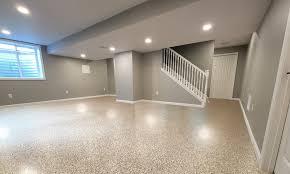
If you’re planning to renovate your basement, epoxy flooring is one of the smartest investments you can make. A basement floor coated with epoxy not only looks stunning but also offers superior durability, moisture resistance, and easy maintenance — all essential for below-ground spaces.
In this guide, we’ll cover everything you need to know about epoxy floors for basements — including benefits, costs, types, installation steps, and maintenance tips.
What Is an Epoxy Floor?
Epoxy flooring is a seamless surface coating made from a mix of epoxy resin and a hardener. When these two components combine, they form a rigid, plastic-like layer that adheres tightly to concrete.
The result? A glossy, smooth, and durable surface that resists stains, cracks, and water damage — making it perfect for basement environments that often face moisture and humidity issues.
Why Choose Epoxy Flooring for Your Basement
Here are the top reasons epoxy has become a go-to basement flooring solution:
1. Waterproof and Moisture-Resistant
Basements are prone to dampness, but epoxy creates a moisture-proof barrier that prevents water from seeping through the concrete. This protects against mold, mildew, and odor — common basement problems.
2. Highly Durable
Epoxy coatings can last 10–20 years with proper care. They resist impact, abrasion, and chemical spills, so you can use your basement as a gym, laundry, storage, or entertainment area without worrying about damage.
3. Easy to Clean
A sealed, non-porous surface means dust and debris won’t stick. You can easily mop or vacuum the floor — no special cleaners required.
4. Customizable Designs
From solid colors and metallic finishes to flake or quartz designs, epoxy flooring allows you to match your basement’s style — modern, industrial, or cozy.
5. Cost-Effective
Compared to tile or vinyl, epoxy offers excellent value for money. It turns a dull concrete slab into a polished, high-end surface at a relatively low cost.
Types of Epoxy Flooring for Basements
Choosing the right epoxy type depends on how you plan to use your basement.
1. Water-Based Epoxy
-
Best for DIYers
-
Low odor and easy to apply
-
Great for light to moderate use
2. Solvent-Based Epoxy
-
More durable and chemical-resistant
-
Stronger fumes (requires ventilation)
-
Suitable for basements that double as workshops or gyms
3. 100% Solid Epoxy
-
Professional-grade option
-
Creates the hardest and thickest coating
-
Ideal for long-term protection
Epoxy Basement Floor Installation Process
While professionals deliver the best results, homeowners can also apply epoxy themselves with the right tools. Here’s how it’s done:
Step 1: Surface Preparation
-
Clean the concrete thoroughly
-
Repair cracks or holes
-
Etch or grind the surface to open the pores
Step 2: Apply the Primer
A primer helps epoxy bond better and reduces the risk of peeling.
Step 3: Mix and Apply Epoxy
Mix resin and hardener as directed. Pour and roll it evenly using a roller or squeegee.
Step 4: Add Decorative Flakes (Optional)
Sprinkle color flakes for a textured, anti-slip look.
Step 5: Apply the Topcoat
Finish with a clear epoxy or polyurethane topcoat for added shine and protection.
Let it cure for 48–72 hours before heavy use.
Epoxy Basement Floor Cost
The cost depends on the material type, design, and installation method:
| Type | Average Cost per Sq. Ft. (Installed) |
|---|---|
| Water-Based Epoxy | $3 – $5 |
| Solvent-Based Epoxy | $4 – $7 |
| 100% Solid Epoxy | $6 – $12 |
| Metallic Epoxy | $8 – $15 |
A typical 500 sq. ft. basement costs between $2,000 and $5,000, depending on customization and labor.
Maintenance Tips for Basement Epoxy Floors
Epoxy is low-maintenance, but regular care keeps it looking new for years:
-
Sweep or vacuum weekly to prevent dirt buildup.
-
Mop with a mild cleaner (no acids or abrasives).
-
Place mats near entryways to trap dust.
-
Reapply a topcoat every few years for extra gloss and durability.
Epoxy vs. Other Basement Flooring Options
| Floor Type | Durability | Moisture Resistance | Maintenance | Cost |
|---|---|---|---|---|
| Epoxy | ★★★★★ | ★★★★★ | Easy | $$ |
| Vinyl | ★★★★☆ | ★★★★☆ | Easy | $$ |
| Carpet | ★★☆☆☆ | ★☆☆☆☆ | Hard | $$ |
| Tile | ★★★★☆ | ★★★★☆ | Moderate | $$$ |
Epoxy clearly wins when you want a durable, waterproof, and stylish flooring option for your basement.
Is Epoxy Floor Right for Your Basement?
If you want a long-lasting, clean, and polished look, epoxy is absolutely worth it. It’s ideal for:
-
Home gyms
-
Game rooms
-
Laundry or utility areas
-
Storage spaces
-
Finished living spaces
You’ll get both functionality and design appeal — something few other basement flooring materials offer.
Final Thoughts
Installing an epoxy floor in your basement is one of the smartest home improvement moves you can make. It transforms a cold, dull concrete slab into a beautiful, durable, and waterproof surface that lasts for decades.
Whether you’re tackling it as a DIY project or hiring professionals, epoxy flooring delivers unmatched value, style, and performance.

 English
 Arabic
 French
 Spanish
 Portuguese
 Deutsch
 Turkish
 Dutch
Dutch
 Russian
 Romaian
 Portuguese (Brazil)
 Tiếng Việt