


I’ve played a lot of casual games over the years.
Some are relaxing.
Some are mindless fun.
Some are perfect for killing five minutes while waiting in line.
And then there’s Eggy Car — the game that looks peaceful but quietly tests your patience, focus, and emotional stability.
What started as a quick distraction turned into a surprisingly intense experience. Today, I want to share that journey with you — the fun parts, the frustrating parts, and the weirdly satisfying parts.
When “Simple” Doesn’t Mean “Easy”
The concept couldn’t be more straightforward:
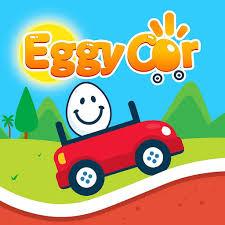
You drive a small car across a series of hills while balancing a fragile egg on top. If the egg falls and cracks, your run ends.
That’s it.
Two buttons. Accelerate and brake.
No tutorial needed. No story. No complex upgrades.
But within the first minute, I realized something important: simple controls don’t mean simple gameplay.
The hills are unpredictable. Momentum builds quickly. And gravity has absolutely no sympathy for your confidence.
My First 10 Attempts: Humbling, to Say the Least
I wish I could say I nailed it from the start.
I didn’t.
My first attempt lasted maybe 20 seconds. I pressed accelerate like I was racing in a championship final. The car tipped backward dramatically, and the egg gently floated off like it had lost faith in me.
Crack.
Second attempt? Slight improvement.
Third attempt? Slightly worse.
The biggest shock was discovering how dangerous downhill sections are. I assumed uphill climbs would be the problem, but it’s actually the descent that punishes you. If you don’t manage your speed carefully, the car bounces at the bottom — and that bounce is often fatal for the egg.
At that point, I laughed.
It felt ridiculous to fail so many times in such a small, colorful browser game.
But I kept restarting.
The Moment I Realized I Was Hooked
There’s always that moment when a casual game stops being “just for fun” and starts becoming a challenge.
For me, it happened around the 600-meter mark.
I had finally started understanding the rhythm of the terrain. Instead of holding the accelerator, I began tapping it gently. I paid attention to the car’s tilt. I anticipated the hills.
When I crossed 700 meters for the first time, I felt something surprising: pride.
It wasn’t about competition. It wasn’t about showing anyone. It was personal improvement.
And that’s when I realized Eggy Car had pulled me in.
The Most Painful Loss
I have to share this one.
After nearly an hour of playing, I reached 980 meters. My personal best at that point was around 750.
I was focused. Calm. Careful.
Every movement was deliberate. I slowed down before peaks. I coasted downhill instead of accelerating. I treated each hill like it was a final exam.
Then came a small bump. Not even a dramatic one.
I pressed the accelerator just slightly harder than usual.
The car bounced.
The egg lifted into the air in the slowest, most dramatic arc imaginable. I hit the brake immediately. I tried to correct.
It didn’t matter.
Crack.
I didn’t yell. I didn’t laugh.
I just stared at the screen in silence.
That one hurt.
But here’s the strange part: I immediately pressed restart.
Why It’s So Addictive
The design loop is brilliant in its simplicity.
-
You fail quickly.
-
You instantly see what you did wrong.
-
You believe you can fix it next time.
-
Restart is immediate.
There’s no waiting. No punishment beyond the cracked egg.
And because each run feels like it’s entirely your responsibility, improvement feels real.
When I finally crossed 1000 meters, it felt earned.
Not lucky. Earned.
The Comedy of Failure
For all its tension, this game is also unintentionally hilarious.
Sometimes the egg doesn’t just fall — it launches into the air dramatically, like it’s escaping a bad situation.
Sometimes you survive brutal hills only to lose on the tiniest, most harmless-looking bump. It’s like tripping over nothing after walking perfectly for miles.
Those moments made me laugh more than rage.
There’s something absurdly funny about getting emotionally invested in protecting a digital egg.
What I Learned from Playing
After dozens of attempts, I started noticing patterns and adjusting my strategy.
Here are a few personal takeaways:
1. Gentle Is Better Than Fast
Aggressive acceleration almost always leads to disaster. Controlled taps give you balance.
2. The Top of the Hill Is Critical
If you’re still accelerating when you reach the peak, you’re setting yourself up for a dangerous bounce.
3. Downhill Requires Discipline
It’s tempting to speed up on descents. Don’t. Momentum builds faster than you expect.
4. Stay Calm
The more excited or nervous I felt about beating my record, the more mistakes I made.
It’s funny how a tiny casual game can teach patience.
Skill vs. Luck
At first, I blamed bad terrain generation.
But over time, my average distance improved significantly. What once felt random started feeling predictable.
I began to:
-
Anticipate slope transitions
-
Manage momentum before it became a problem
-
Correct small tilts before they turned into disasters
That consistency proved something important: it’s not just luck.
It’s subtle skill development.
Why I Keep Coming Back
Even after hitting new personal records, I still open the game occasionally.
Why?
Because it’s easy to start. No commitment. No long sessions required.
It fits perfectly into short breaks. And every run feels like a fresh challenge.
In a world filled with massive, complex games, there’s something refreshing about such a focused experience.
Just you. The car. The egg. Gravity.
Nothing else.
Final Thoughts
I didn’t expect much when I started playing Eggy Car.
But I ended up with:
-
Genuine laughs from ridiculous failures
-
Real frustration from near-perfect runs
-
A surprising sense of accomplishment from improvement
-
And a reminder that simple ideas can create powerful experiences
That’s the beauty of well-designed casual games.

 English
 Arabic
 French
 Spanish
 Portuguese
 Deutsch
 Turkish
 Dutch
Dutch
 Italiano
 Russian
 Romaian
 Portuguese (Brazil)